Taken and edited from IrishCentral Staff @IrishCentral Aug 20, 2019
Lord Louis Mountbatten (1900 -1979) wearing the Veterans of Foreign Wars Merit Award, presented to him by the U.S. Veterans of Foreign Wars organization for outstanding service in World War II, circa 1965. KEYSTONE/HULTON ARCHIVE/GETTY IMAGES
Throughout Lord Mountbatten’s life, and in the years after he died in an IRA bombing on August 27, 1979, rumors swirled about his extramarital affairs. An FBI dossier on Mountbatten, released thanks to a Freedom of Information request, reveals shocking information about the royal who was a mentor to his grand-nephew Prince Charles.
The 75-year-old intelligence files describe Louis Mountbatten, the 1st Earl of Burma, and his wife Edwina as “persons of extremely low morals” and contain information suggesting that Lord Mountbatten was a pedophile with “a perversion for young boys.”
1922: Louis Francis Victor Albert Nicholas, Ist Earl Mountbatten Of Burma (1900 – 1979) on his wedding day to Edwina Cynthia Annette Ashley. (Photo by Hulton Archive/Getty Images)
American intelligence officers began compiling the dossier in 1944, after Mountbatten was named supreme allied commander of southeast Asia. They were obtained via an FOI request by British historian Andrew Lownie, whose book, The Mountbattens: Their Lives & Loves, will be published on August 22.
When the Baroness Decies, Elizabeth de la Poer Beresford, was being interviewed by the FBI about another topic, she raised concerns about Lord Mountbatten. Featured Articles
The file reads: “She states that in these circles Lord Louis Mountbatten and his wife are considered persons of extremely low morals.
“She stated that Lord Louis Mountbatten was known to be a homosexual with a perversion for young boys.
“In Lady Decies’ opinion he is an unfit man to direct any sort of military operations because of this condition. She stated further that his wife Lady Mountbatten was considered equally erratic.’
The interview was signed “EE Conroy”, head of the New York field office, who wrote that she “appears to have no special motive in making the above statements.”
Lownie’s book also includes an interview with Anthony Daly, who worked as a rent boy for London’s rich and famous during the 1970s. Daly claims that “Mountbatten had something of a fetish for uniforms — handsome young men in military uniforms (with high boots) and beautiful boys in school uniform.”
28th March 1947: Lord Louis Mountbatten, 1st Earl Mountbatten of Burma (1900-1979), takes the salute from the Governor General’s bodyguard at Viceroy House in New Delhi, as he takes up his position as Viceroy of India. (Photo by Keystone/Getty Images)
Newsweek has speculated whether television series The Crown, which hasn’t shied away from addressing royal scandals and rumors in the past, will broach the question of Lord Mountbatten’s friendship with the DJ Jimmy Savile. Hundreds of accusations of predatory and pedophilic sexual abuse against Savile were investigated following his death in 2011:
“It’s not clear whether The Crown will ever address Mountbatten’s friendship with Savile, sometimes linked to the investigation of Kincora Boys’ Home in Ireland, a school that many believe housed a pedophilia ring for powerful British men. The show has certainly fictionalized rumors regarding the royal family, but even hinting that Mountbatten (or Charles) knew his buddy Savile had dark intentions would be a daring—perhaps even damning—move.”
Mountbatten holidayed every summer at Classiebawn Castle on Mullaghmore Harbor in County Sligo. On August 27, 1979, he was killed in a bomb attack carried out by the IRA.
22nd May 1979: Charles, Prince of Wales and Lord Louis Mountbatten (Louis, 1st Earl Mountbatten of Burma) (1900 -1979) cutting a ribbon to allow the public to enter Lord Mountbatten’s home, Broadlands in Romsey, Hampshire. (Photo by Central Press/Getty Images)
He had, along with family and friends, embarked on a lobster-potting and angling expedition when a bomb on board was detonated just a few hundred yards from the harbor.
He died of his injuries, along with his grandson Nicholas Knatchbull (14), local boy Paul Maxwell (15), who was helping on the boat, and Lady Brabourne (83), his eldest daughter’s mother-in-law.
Prince Charles, who described Lord Mountbatten as “the grandfather I never had,” visited the site of his assassination in 2015.
The once much-lauded British Unionist militant and notorious paedophile William McGrath photographed in his regalia as a “chaplain” of the Orange Order. Throughout the 1970s he procured the “ritualised” abuse of children for suspected members of the British military, police, judiciary, government and aristocracy
I’ve used the platform presented by An Sionnach Fionn to discuss the Kincora Boys Home scandal on many occasions in the past, and now Channel 4 News in Britain has taken up the story and brought it to a wider – and more importantly – British audience. Throughout the 1960s, ’70s and early 1980s the state-funded Kincora care home for children in Belfast was at the centre of a ritualistic paedophile ring whose tentacles stretched from the UK to Ireland. The conspiracy of abuse incorporated individuals from across the full gamut of influential – and frequently unassailable – British and Unionist life: the government, armed forces, police, intelligence services, terrorist factions, political parties, civil servants, and that most elusive of all British concepts, the “establishment”. Among the names that crop up with the greatest frequency in the research by journalists and justice-campaigners into the abuse is that of Louis Mountbatten, 1st Earl Mountbatten of Burma, a cousin of the present British head of state and “honorary grandfather” to Charles, the Prince of Wales. Mountbatten was assassinated by the (Provisional) Irish Republican Army in August of 1979 while visiting Classiebawn Castle, a vast estate built on lands seized from native Irish communities in the Sligo region during the 1600s and retained in British aristocratic hands until the 1990s. So far no serious effort has been made by the UK authorities to investigate the three decades of assault, rape and torture at the Kincora Boys Home.
ELLA O’DWYER is from County Tipperary. MARTINA ANDERSON is from the Bogside in Derry. Both were arrested in Glasgow in June 1985 with Gerry ‘Blute’ McDonnell, Peter Sherry and Pat Magee, ‘The Brighton Bomber’. Ella was 26 years old. Martina was 23. The following year, on 11 June 1986, all five were given life sentences at the Old Bailey in London for planning IRA attacks. Ella and Martina served their time in Brixton Prison and Durham Prison before being transferred to Maghaberry Prison, near Derry, in 1994. After serving 13 years in jail, they were both released on 10 November 1998 under the terms of the Good Friday Agreement. Ella is now a staff writer with An Phoblacht and her book, The Rising of the Moon: The Language of Power (Pluto Press, London), on literature, language and Irish history, is based on the MA and PhD she completed in jail. Martina got a first class honours degree in social science while in prison. She was elected as a Sinn Féin Assembly member for Foyle earlier this year and is a member of the Policing Board. She is the party’s spokesperson on Equality.
Ella O’Dwyer and Martina Anderson-Durham Jail-early 90’s.
Ella’s account
BEARING in mind that it’s 22 years since Gerry McDonnell, Pat Magee, Peter Sherry, Martina Anderson and myself were arrested, some of the finer details, especially of Christmases, are lost on me, and it wasn’t from hooch – at least not until the Christmas of 1994 when we were transferred back to Ireland where our comrades in Maghaberry Prison had prepared a party of note. We were lifted in Glasgow in June 1985 and transferred to London. Our first night in Brixton Prison was awesome. I had a real bed and a room with a view. Just as I was bedding down for the night I heard a voice from the cell below asking me if I wanted a fag. He advised me to unravel threads from the blanket, knot them together to make ‘a line’. I did just that and dropped the line down to the window below and, a few seconds later, I was smoking blissfully to the tune of, “Every little thing is gonna be alright,” rendered by the Good Samaritan below. As far as the prison regime was concerned, Martina and I were persona non grata. When an alleged spy from East Germany called Sonia arrived at Brixton she was told as much. If she kept away from us she’d be ‘all-rightish’, but if she befriended us she’d get the same treatment as we were getting – up to five strip-searches, around six body-searches a day, relentless cell-searches and usually 23 hours’ lock-up a day. Sonia befriended us nevertheless, right to the end. She was with us for our first Christmas in Brixton Prison and it snowed that morning. We got out to the yard and, like mad children, drew Christmas messages on the snow to people who’d never get to see them. We exchanged presents and read the greetings in An Phoblacht – Ann and Rab of the POW Department, our families and God knows how many others. We even got our faces on the front page of the paper one Christmas. What a blast! But Brixton wasn’t exactly a pantomime. As one member of the Board of Visitors said: “The only thing you are entitled to here is to be fed, wear clothes and get an hour out of the cell per day.” And that basically was our gettings. But my mother used to always tell me growing up that a bit of hardship toughens you for things to come. She was always a bit of a wizard that woman and, sure enough, Brixton was the training ground for even bigger things – H-Wing, Durham. In our naiveté we’d been kind of looking forward to the move to H-Wing after the ongoing conflict with the screws in Brixton and the sometimes very abusive manner of the male prisoners there. My first sighting of H-Wing gave me the distinct impression of a big dirty chimney but I still didn’t know how the hell Santa Claus was ever going to get down it. The first person I remember seeing as we went onto the wing was an old lady of about 70. She was remarkable for the fact that she’d push a sweeping brush a few feet, stop suddenly and say, “Half-past four,” in a broad Cockney accent then continue to push forward another bit. The word ‘smoke’ must have been written on my forehead even then because she made a beeline for me to ask for a light. No problem, I thought, until a screw came up and told me she was an arsonist and not to be given a light under any circumstances! The ‘half-past four’ thing emerged from the fact that she was meant to have been hung a number of years previously at half-past four and got reprieved to Durham. Some reprieve. Soon we had two Martinas with the arrival of Dubliner Martina Shanahan, one of the Winchester Three, in 1987. We were thrilled at the arrival of one of our own but a bit despairing too in the knowledge of what lay ahead of her. We three became close – she was our baby though she had more sense than the two of us put together. Martina Shanahan was only in the place a day or two when Anderson and myself were for the block for something we’d done before her arrival. Shanahan was inconsolable: her two closest friends in the place were being locked up and she wasn’t. We’d a bit of a job convincing her of the importance of the responsibility we were now placing on her young shoulders. She’d have to be out on the wing to write out letters about our ‘dreadful’ plight and hold the fort ‘till our ‘release’ while we suffered great toils and torments! We could hardly hold the laughter in. Pretty soon, she was for the block too. Then the Winchester Three won their appeal in 1990 and we were wracked by conflicting emotions: joy at seeing her released and yet the sadness of letting her go. There were times throughout the Durham period when we’d have run-ins with the other prisoners but we made it clear that neither the system nor the prisoners could come between us – and that clarity was sometimes delivered in less than gentle ways. They say that if you’ve a reputation of getting up early you can get up at mid-day. But this again is a Christmas tale and when we were transferred to Maghaberry we had a Christmas never to be forgotten. We were met on the first visit with the delighted faces of our families – the people who had gone through so much hardship on our behalf for all those years. While walking around that exercise in Durham under the dingey, grey chimney of H-Wing I’d sworn that if I ever got back under an Irish sky I’d kiss the ground on the first Christmas there. If the Pope was good enough to kiss it, so was I. And that’s how I’d begun Christmas morning, 1994. It was one hell of a Christmas. I remember saying to the O/C, Mary McArdle, that people outside would have paid to come into a party like this. “I doubt it,” said Mary. Marie Wright (RIP) complained that the hooch was below par and nothing like the usual quality. Martina and I disagreed. It was like fine wine. 1994: a good year — vintage stuff.
Martina’s account
BY THE TIME we arrived at Brixton, after ten days’ interrogation, I was shattered tired and couldn’t care less about my new surroundings. I needed sleep without expecting the door to open for more questioning. So while Ella was on a full-scale op’ trying to get fags through her window, I was out for the count. We spent most of the next 13 months with no clothes on, with all the strip-searches we were getting. By way of protest we were for refusing to put the clothes back on after the next strip-search and just wear dressing gowns but for the wise intervention of Mitchel McLaughlin. More often than once, Mitchel helped us see the light during the many visits he made to us in jail. Another time we refused to put our cells back together after two cell-searches in the one day and we spent the night sleeping on the heating pipes. But again we could see where that kind of protest would take us and we were still only on remand. Then we wanted to batter – if not worse – one of the screws but were again advised against it. But we did have the consolation of seeing the state the screws would get into after a two-week shift on the wing. They’d be utterly shattered and couldn’t wait to get away form us. We were hard work all right. My role in jail was of entertainer. I’d sing every night out the window in response to the endless requests of the men in the surrounding blocks. The acoustics of the exercise yard in A-Wing were a model for aspiring talent like mine but the next day the screws would come to the door and put me on report for ‘disturbing the neighbours’. They said there were complaints! The ingratitude of it all. Myself and Ella were always a bit nuts so we can’t blame long-term imprisonment. We decided that for the last day of the trial at the Old Bailey we’d try and dress like Tricolours. We literally wore green, white and gold. Luckily nobody noticed! Boreham was the name of the judge handing out the life sentences and half the time he was asleep during the proceedings. He was so old he should have been at home praying for a happy death! In the middle of the constant bombardment with strip-searches, cell-searches and ongoing harassment we found a friend, a woman called Nina Hutchinson, who has sadly died since. Nina visited us regularly and was the instigator of a strong campaign around prison conditions in Brixton and later in Durham. As for Durham! It took me a whole week to realise I wasn’t in a hospital. In fact it took me a week to even talk really. But that wasn’t too bad. There was a woman who’d been there for years and she never spoke at all. Another woman used to burn herself with fags. There were so many unwell women in H-Wing who, instead of being sent to jail, should have been sent for psychiatric care. One of the first people we met in Durham was Judith Ward [convicted of bombing a British Army coach on the M62 in England]. She bounced up to us and asked us if we’d like to come to her cell for a drink. A drink! Ella and I exchanged wide-eyed glances. Hooch, we figured. Could it really be? We moved swiftly to Judith’s cell. In fact, I think we got there before her. She produced a flask, three tea bags and a jar of coffee. Not quite the same thing as hooch but she did have some traditional Irish music that the Gillespie sisters had left with her on their release. Another person we met the first day in Durham was a Scottish woman who greeted us with “I’m a prostitute, a lesbian and I’m in for murder – and how are you?” We became friends and, thankfully, she left it until the day before we left H-Wing for good to tell me she fancied me! I was a happily married woman. Both Ella and I had jail weddings. Ella’s was a nice day but my wedding in 1989 [to IRA POW Paul Kavanagh] was more like an obstacle course. By the time I’d been driven a mile a minute on the four-hour journey to Full Sutton Jail, near York, vomiting all the way and given a couple of brief hours to get the business done and rushed back to H-Wing again, I was totally bewildered and upset. Ella jumped to the wrong conclusion at the sight of me. “Don’t worry, all’s not lost – we’ll get you a divorce!” That really did it and I didn’t sleep a wink that night. We didn’t just celebrate weddings. We made a big thing of Christmases and birthdays. In fact, I remember Ella’s first mid-life crisis – she was 30 and was utterly miserable. On such occasions we’d exchange gifts and get spoilt by our families when they’d come on visits. If one of us got something, the other one did too. The Andersons to this day will never forget traipsing around the streets looking for prawns for Ella. Prawns! You can imagine the searching the screws did on the big basin of prawns that was enough to feed an army. My mother, Betty, was the rock in our household right throughout my sentence. I will always love her. But it wasn’t all partying and we spent the first six months of our time in Durham on ‘lock-up’, meaning everything, including the mattress, would be taken out of the cell and you saw nobody except the screw who came to let you ‘slop out’. We didn’t even get to see each other. The governor let us know that he had been governor of Wakefield when Frank Stagg died and he’d happily send us home in boxes. If you needed a lesson on the inhumanity and brutality at the core of imperialism you only had to look at the way prisoners were treated – even the sick and vulnerable ones we saw in Durham. We wanted to change it all, change the world we were living in, and in a way we did just that. By the time we’d been transferred from H-Wing, the jail had been refurbished to a relatively habitable state with toilets and hand-basins in each cell. After threatening to wreck these pristine abodes if we weren’t allowed to inhabit the ones on the upper floors, they agreed to let us onto the top landing. So, for the first time in about eight years, we had a view of normal daylight from our cells. I remember waking up the first morning and banging on the door, shouting to the women to look out the window. It was a great big beautiful orange ball – the sun was rising. It was magic!
On Monday 9 August, 1971, a series of raids across the Six Counties signaled the beginning of internment without trial, as hundreds of people were dragged to prisons and camps, where many were tortured. Within the first 24 hours 342 people were arrested and within three years the number of people held in Long Kesh internment camp alone had risen to 1,500. This was at the instigation of then Six County premier Brian Faulkner. Reminiscent of following tragedies like Bloody Sunday and the 1981 Hunger Strike it emerged that Free State governments of these periods were ambivalent enough in terms of addressing such tragedies. The detainees were overwhelmingly nationalist and male but among the women interned was Belfast woman Margaret Shannon, who this week talks to Ella O’Dwyer about her own experience of internment, how the Irish government of the time let the nationalist people of the Six Counties down, and her hope that now – 36 years on – the importance of remembering such events is recognised.
There’s a whole lot of ways of putting people in jail. What exactly is internment? We had, of course, the Diplock courts here in the North in the late ‘70s where there was no jury, but during internment there was neither judge nor jury. Internment is basically indefinite detention without trial.
What year were you arrested? I was arrested on 3 March 1973. I was 18 years of age and was held for five days and then I thought I was going home. Of course I wasn’t [laughs]. I was heading for Armagh Jail. I was taken from our house in Turf Lodge at the early hours of the morning. None of the others in the family were lifted. My dad said that morning – ‘say nothing’. I took his advice. I got a bit of a pushing about and one cop – my dad had warned me about him – he was called Harry Taylor – a veteran of brutality, said he’d come down to the cell and rape me. He didn’t but I was afraid.
How at 18 did you cope with that kind of aggression and how was Armagh? In God’s truth I said, I’m not going to let it annoy me, and I knew there were republican POWs in Armagh ahead of me – Liz McKee and Tish Holland were there. Tish was only 17 when she was interned and then there were eight republican POWs in Armagh too. The OC was Eileen Hickey. Sadly, Eileen died in recent years. I learnt so much in Armagh about life, discipline, values and how to live with other people. We kind of leaned on each other and I made a lot of friendships in jail then – people I still know to this day.
Do you think the Irish Government could have done more to counteract Internment? I feel the Irish Government let us down back then. In 1970, eight months before it was introduced by Faulkner, Jack Lynch, the then Taoiseach, and his Justice minister Dessie O’Malley, announced that the Irish Government was preparing to introduce internment in the South. In the event, they decided against it but the announcement was later used by the Stormont premier to justify bringing in internment in the North. I’d like to see the Irish Government do what they should have done years ago – stand by their own people and particularly now during the Peace Process. I’d ask them to show sincerity after all these years – to have no hidden agendas and to do what they should have done all those years ago – take internment off the statute books. I’d ask the Irish Government to look into its own legislation and banish the pain of imprisonment without trial in the 26 Counties – it should be banished from Ireland, North and South.
What did you do when you came out of jail at twenty and how did internment impact on your life later on? I spent two years in jail and it did take away part of my youth. My dad and my brother were also interned, so it was hard on my mother. She went to the rallies against internment – she was great. But you must remember that while I was in jail I had POW status. We turned a bad situation into a good one, as they say, and we studied. I’m a counsellor now – not a political councillor – I work in the area of suicide support and with victims of sexual abuse. I have a very happy life now. I didn’t let jail ruin my life but it took away some of the important years. It is estimated that something in the region of 1,981 people were interned at that phase of the struggle. Were there many loyalists interned? Internment went on until December 1975. It was a weapon traditionally used to put down republicanism in Ireland but in fact it had the opposite effect and actually led to increased support for the IRA. Out of almost 2,000 internees only around 107 loyalists lifted. That speaks for itself.
Do you think there has been progress in the North in terms of relations between the two main communities? Yes, things have moved on. I remember the bigotry of unionism back at the time when I was growing up. When I was 15 I left school and took my first job as a junior clerk with an agricultural firm. I remember one day serving tea to some of the other staff. One of them refused the tea and said he didn’t drink ‘holy water’. When I told my boss about it he said I’d better leave. But I’m by no manner or means a bitter person. I feel, for instance, that the loyalist community haven’t nurtured themselves enough all along. They never really took the chance to learn or study and I think they are only doing that now.
In the period of 30 years of what is loosely called ‘the Troubles’, the republican struggle has had many traumatic phases. Do you think there is a tendency for us to lose sight of the memory and relevance of internment? Maybe. But for the people who were directly affected the memory is alive. I think we need to recall that period – internment – and the injustice that was involved. As I said, it didn’t ruin my life, but it took away some of my youth and the internment of my father, brother and myself was hard on my mother. The families of all the other internees went through the same. We have had hugely successful commemorations around the 20th and 25th anniversaries of the 1981 Hunger Strike and these events were central to educating young people about those tough times. It’s important that people throughout Ireland be made aware of the consequences of internment and that we do all possible to ensure it never happens in this country again. It’s important to remember, recall and look at what happened back then.
In 1976, political prisoners had their status removed and were treated as common criminals. This sparked the blanket protests – where prisoners refused to wear jail uniforms – and these later escalated to hunger strikes. In an extract from his new book, Bishop Daly describes the foul conditions at Long Kesh.
IN MARCH 1978, the prisoners ‘on the blanket’ escalated their protest by refusing to clean out their cells, wash or go to the toilet. They smeared the walls and ceilings of their cells with their own excrement and the floors streamed with urine. The lasting memory of visits to Long Kesh during that protest was the horrendous stench. The cells were industrially cleaned by the prison authorities with power hoses from time to time and prisoners were moved to other cells. I have no idea how people lived or worked in those conditions. During my visits there to the wings, I was violently ill on several occasions. The revolting and foul smell seemed to permeate everything I wore, even days after the visit. Items of outer clothing, even after dry cleaning, were virtually unusable subsequently.
In 1980, after four years of unsuccessful protests appealing for special status, a status that would recognise them as political prisoners, prisoners of war rather than criminals, rumours began to circulate that a hunger strike was imminent.
Individually and jointly, Cardinal Tomás Ó Fiaich and I made several lengthy visits to the H-Blocks in Long Kesh Prison in the spring and summer months of 1980, meeting virtually all the protesting prisoners individually in their cells. These visits usually lasted from early morning until late in the evening. We also met with the prison authorities and visited some Loyalist prisoners, including some of their better-known leaders.
‘It was a parallel universe’
Those lengthy visits to Long Kesh are etched forever in my memory. Spending seven or eight hours at a time going around cells visiting young men in those conditions was unforgettable. It was a parallel universe. There were usually two men in each cell. Their hair was matted and they had long unkempt beards. They were thin and haggard and their eyes were sunken. They wore long blankets. There was no furniture in the cells. The stench was intense and allpervasive. I simply do not know how people retained their sanity after spending such a long time in that environment. Yet I always found the prisoners in high spirits and imbued with a steely determination. Only a few of them talked about a hunger strike.
However, Cardinal Ó Fiaich and I were both convinced that if they embarked upon that course, they would see it through. We also believed that if these men were to embark on their threatened hunger strike, it could have disastrous consequences for the community as a whole. We decided to approach the British Government jointly on behalf of the prisoners. We believed that they had a legitimate and arguable case and that both the Government and prisoners and society generally in the North would benefit from a less stringent and degrading prison regime. We reached this conclusion on the basis that were it not for the political circumstances that these young people found themselves in, most of them would never have seen the inside of a prison. Most of them came from stable family backgrounds.
We also believed that these protests were undertaken on the prisoners’ own initiative, rather than on bidding or orders from any group outside the prison. Equally, we believed that the protest in the prison was perceived by the prisoners as their continuing contribution to the struggle going on outside the prison.
The issue was further complicated by the fact that a sustained paramilitary campaign was going on contemporaneously throughout the North. In the course of that campaign, many prison officers were murdered. Those who perpetrated these murders claimed that they were acting in support of the prisoners on protest. There was intense anger and hatred between the prisoners and prison staff. There were many allegations of assault. Intimate body searches were frequently carried out, often in a brutal and demeaning manner. There are few dignified methods where intimate strip searches are concerned. The searcher and the searched are dehumanised. Long Kesh was a loathsome, hateful place as well as a powder keg as the 1970s moved to the 1980s.
Sinn Fein MLA Raymond McCartney who spent 53 days on hunger strike in 1980
In 1976, Belfast man Kieran Nugent became the first republican prisoner in Long Kesh to refuse to wear a prison uniform. Political status for prisoners granted in 1972 had been withdrawn and a process deemed ‘normalisation’ by the British Government had begun. To republicans the attempt to criminalise their campaign was unacceptable and the refusal to wear a prison uniform by Kieran Nugent who told warders they’d ‘have to nail it to my back’, set in motion a five-year period of conflict inside the newly constructed H-Blocks.
The ‘no-wash’ protests by 1980 gave way to a hunger strike, but after that broke down, in March, 1981, Bobby Sands was the first to embark on a second hunger strike which by October that year saw ten men die and dozens more die across the North as violence exploded on to the streets outside.
The first hunger strike began on October, 27, 1980. The protesters set out their stall under a list five demands: 1-The right not to wear a prison uniform; 2-The right not to do prison work; 3-The right of free association with other prisoners;4-The right to organise their own educational and recreational facilities and 5-The right to one visit, one letter and one parcel a week.
Seven men, including Foyle Sinn Fein MLA, Raymond McCartney said they would fast to the death in the pursuit of the re-establishment of political status. Three women in Armagh Jail also embarked on the strike.
A deal offered by the British Government, appearing to offer the prisoners the right not to wear a prison uniform was made as Christmas approached. With one of the men, Sean McKenna close to death, the strike was called off. When it later emerged that what actually was on offer was a ‘deal’ to allow prisoners to wear ‘civilian type clothing’ supplied by the prison authorities the scene was set for another hunger strike.
“On March 1, 1976 the British Government removed political status. I think most people thought that this was a half-hearted attempt and they’d roll over within a short period of time. But, clearly what was emerging was a complete change in policy by the British Government who were intent on the idea of ‘normalisation’, ‘criminalisation’ and ‘Ulsterisation’.
“Instinctively, any of us who found ourselves in prison at that time, knew we were political prisoners and any attempt to criminalise us just wasn’t going to work. It became a battle of wills.
“But, I think by the end of the hunger strike in October, 1981, most people looking on were saying that whatever was going on in the North that nobody in their wildest notion thought it was a criminal conspiracy. They certainly saw it as a political conflict. They may not have agreed with the armed actions of the IRA, but they certainly viewed it as a political situation.
“So for us, by that stage, the process of criminalisation was in tatters. But, there was a very high price paid because 10 people had died in prison and 60 or 70 people had died on the streets.
A group of republicans from Derry taking part in a protest march in 1981 during the hunger strike.
“Within the prisons we knew that we still had work to do because what we had to do was turn that acceptance of political imprisonment into every day conditions. By the end of the hunger strike I suppose there was a big recognition of the difference between the criminals uniform and our own clothes was one manifestation of it. And, over the years we continued to ensure the conditions in Long Kesh reflected that.
“By the late 1980s and early 1990s, journalists were frequent visitors to the prison and left with the overwhelming impression that we were a ‘different type’ of prisoner. They may have gone out and had questions about who you were and what you were about but they were in doubt that we were political prisoners. That was a big source of validation.”
The intensity of the events and scale of death and destruction between 1976 and 1981 in retrospect now seems enormous, but Raymond McCartney maintains that it paved the way for future political developments.
“It was only five years, but it was a very intense five years. It is only when you get a bit older you realise just how short a time span it was, because when you roll onto 1998 and the Good Friday Agreement there was an acceptance of the framework that there was a political conflict which had to be resolved by political means-the recognition of political mandates, the political framework to address all these issues, but at the core of that was the acceptance of political prisoners.
16th July 1981: Masked IRA members lead the funeral procession of hunger striker Martin Hurson. He died after 46 days on hunger strike.
“There is no doubt there is evidence that there were elements within the British Government determined that political status should not be granted for whatever reason. Even in 1972, there was internment without trial and up to 1,000 people were held in conditions. They wore their own clothes. There was a recognition of the political conflict of one nature or another. How that was defined by different people is a different matter. I know that other people have made the observation that for too long the British tried to deal with the North as a security issue. therefore, when you have a security mentality or emergency laws, emergency courts, emergency interrogation centres, everything is changed and turned upside down.
“If you follow their logic from that point of view and they say ‘you cannot now say you are political prisoners’ whilst trying to pretend that everything else about the situation isn’t political too then the penny drops in a whole lot of ways.”
The years since 1981 have provoked much debate within wider nationalism about whether or not the hunger strike was harnessed as a catalyst for the republican movement to embark on the path to politics. The election of Bobby Sands to Westminster and Kieran Doherty to the Dail was followed quickly by a debate within Sinn Fein about ending their policy of abstentionism from political institutions that would lead to a split in the movement in 1986. The ‘Journal’ asked Raymond McCartney about his view on this.
He said: “It is interesting now, because everyone has their story about what the origins of the peace process was. But, there is absolutely no doubt that when you look back as far as 1982 that Gerry Adams that there needed to be a political way of resolving the conflict, because military stalemate was exactly that. The famous Glover Report from the British Army accepted that there was not going to be a military defeat, was them in their own way, saying the IRA was a political force and that the guys in Long Kesh were political prisoners. They job they were sent to do, they couldn’t do and that was to impose a military defeat and by extension their laws of oppression were not going to work either.
“It made the situation painful and made the conflict last longer. Then, whenever the formula for the Good Friday Agreement was put forward, some former prisoners will tell you that it was too high a price to pay, but the core accepted it was a political problem and without political solutions it was never going to be resolved.”
When the first hunger strike ended in October of 1980, Raymond McCartney had gone without food for 53 days. So, what are his own personal recollections of the physical effects of what took place?
I suppose when you look at that time in 1981, Martin Hurson died after 46 days whilst others like Kevin Lynch were approaching 70 days when he died. In a very strange way hunger strike affects different people in different ways. Even the day the hunger strike ended in 1980, I was still walking about, I was out of bed. But, there is no doubt that your body slows down. My ability to see was greatly affected, but, the body is a remarkable piece of equipment and resilience is obviously built in. As you get older you reflect on it and it is difficult to work out in your head that you could sustain doing without food for 53 days and others for 66 days.
“I view the act of hunger strike as a two-phase thing. There is a phase when you are ending it that your body tells you that it is shutting down. When you speak to people like Laurence McKeown, who slipped into a coma he’ll tell you that there are definite signals that you were coming to the end of your life.
“That’s the second phase and it’s something that I wasn’t faced with. I think that if I had been in that position, I could have died and I would have died, but I didn’t face it. But, I have talked to Laurence McKeown who did face it. He says he was very, very aware that his body was closing down. People have asked me do you think you would have died but it’s difficult to answer because I wasn’t faced with it but I had certainly prepared for it.
“There’s always the sense that the first hunger strike ended unsatisfactory. There’s no doubt about that. People will say that the prisoners were out manoeuvred, but we believed in good faith that there could have been a solution and we wanted it to be resolved. It wasn’t about trying to defeat or crush anybody, it was about giving us what we were entitled to. But there was always the sense ever since that it was like somebody throwing you the ball and you dropped it, through no fault of your own, but you’d still dropped it and someone else had to come along and pick it up. That’s why I have the greatest admiration for the people who went on the second hunger strike, because whatever doubts there were about what going to happen with the first strike, Bobby Sands knew what was going to happen. And, when Bobby Sands died the other hunger strikers were in no doubt that the next phase was death.
“I don’t think you can really ever put yourself in that position to imagine what their thought processes were.”
Undoubtedly, it was Margaret Thatcher more than anyone else within the British establishment at the time who demonstrated complete determination to use the protests in Long Kesh to divide and break the republican movement. Many commentators have pointed to the INLA assassination of her colleague Airey Neave in 1979 as one reason why the British Prime Minister embarked on a path of total intransigence towards the IRA. However, Raymond McCartney believes that he thinking was a lot wider than that.
“Whatever her antipathy towards Ireland was and what came with that, she was setting out a broader political stall. Look at how she treated the miner’s later on. Reading state papers now, 30 years after these events, her take on the miner’s strike wasn’t just a battle about conditions in the mines, it was about strategically tackling trade unions. It was a case of her saying who is the strongest union-who is the spine of the working class and acting on that,” he said.
As the centenary of the Easter Rising is fast approaching, the ‘Journal’ asked the Sinn Fein if the ideals as laid down in the Proclamation of the Irish Republic was something that was discussed or considered during the prison protests of the 1970s and 80s?
Raymond McCartney said: “I think you have to be honest with yourself and say that when we grew up in this city, and I am not saying that politics was prevalent, but you had a very clear idea that something was wrong and it appeared there was always the inability to do anything about it. There was gerrymandering and the city corporation. We’ve all heard stories about people who had never set foot in the Guildhall until their later years because it was seen as place belonging to unionists. Sometimes, that might be overstated, but that was the perception.
“I always remember that being in jail gives you the time to reflect and read and think and I also always remember that Bobby Sands out of all the people who had been in jail was very clear about what he was there for because he wrote it all down. Some of the things he wrote captures the way a writer works-it’s all encompassing and puts it out there in a very vivid way.
“I had previously been interned, I had an understanding about what being a political prisoner was. You had your own clothes and a bit of freedom to associate with other prisoners and you didn’t feel that sense of captivity although you were locked up. Bobby Sands caught on very early that the British were trying to defeat us in the prisons. It wasn’t just about trying to give you a hard time or denying you your own clothes, it was that they had a core idea to break us.
“One of the rewarding things for me personally was that the system we had in the end in jail was one based on equality. That we treated people as equals. If you couldn’t treat the person beside you as a comrade and an equal that you couldn’t expect anyone else to believe that you’d treat all people as equals as you went on through life.”
“Not one single day goes by without thoughts of our ten heroes of the 1981 Hunger Strike and the smashed hopes of the 1980 Strike,” says Terry Kirby, a veteran of the Long Kesh blanket protest.
“The 1980 strike looked to be a success with the Brits promising an end to the strike and a new approach from them. With at least one of the strikers near to death we hadn’t a lot of choice, the strike was called off and the rest is history.
“What followed was a total devastation, and it was a feeling we were soon to get used to during the next year. To survive without losing our sanity was nothing less than a miracle.
“We became numb and I believe there was an acute awareness that the actions by the British, indeed were leading to deaths in the H Blocks; one way or another, perhaps being the catapult which would bring the Irish struggle onto the world stage.
“The 1981 Hunger Strike became so inevitable the sadness was palpable. The 1st of March began the long Hunger Strike that would lead to one of the saddest periods of modern Irish history.”
Kirby, in the interview, said he wanted to share brief encounters with some of his comrades as he personally knew them. not the media hype that typically surrounds these incredible men and the events in history.
“I was fortunate, he said, “to know several of the ten personally and I shall start with my dear friend and comrade Joe Mc Donnell. For a short while I went with Joe’s youngest sister, however my friendship with Joe was much longer. We were interned together and later we served together in the sentenced wings of prison.
“I worked with Big Joe in West Belfast and soon learned that his care and love for our people was immeasurable. It was not long before I began to copy his wonderful style with those who opened their homes to us. He once arranged for a family’s couch to be recovered; we both delivered some groceries to a family or two that had been good to us but who we knew to be in financial difficulties. I had a good teacher in my friend Joe McDonnell.
“Kieran Doherty was another comrade I would class as a personal friend. He was known as ‘the gentle giant.’ Kieran and I played GAA games when we were kids. He was a very clear and concise political thinker. He was a great supporter and advocate for the GAA.
“We were interned together and later went on the run and subsequently we were captured together. Kieran was strong willed. When the prison warders wanted to do a mirror search on him (legs stretched naked over a mirror to examine your rectum) he resisted, the outcome of the refusal was to have his testicles squeezed until he finally collapsed.
“Kevin Lynch was a member of the INLA. He had a kind heart and a great sense of humor but he was a very sincere person. His nickname was Barabas and I heard this story before he was moved into the same cell with me. Before being moved into my cell, Kevin was in a cell across the wing from me. On our wing was a prison orderly (prisoner who works for the prison) who was particularly nasty to our prisoners.
“During the no wash protest, Kevin was in his cell spreading excreta around the wall when he saw this orderly outside his cell window (there actually wasn’t any glass in any of the windows). When Kevin saw him he threw a piece of the excreta at the orderly which hit him on the head. Of course this lead to one of the many beatings Kevin received. He was eventually moved into my cell. Kevin made me laugh so much he really helped me. He too was a great one for the GAA, and he was a gifted storyteller.
I first came into contact with Francis Hughes in Musgrave Park Hospital Military Wing. I had been moved to the hospital wing after a particularly severe beating. My hospital room had its own bathroom and the governor from the blocks came in and told me that I had to shave.
He said that I needed to comply with prison regulations. “I’m not in prison,” I said, “I’m in a hospital.” None too pleased, he walked away. While in my hospital room I saw a person being wheeled into the next room. I shouted, “Who are ye?” “I’m Francis Hughes, republican volunteer, Who are you?” I answered, “Terry Kirby, Blanketman, H3”. The next day they came in and moved me away from him.
I met Patsy O’Hara while interned in 73/74. He was with the INLA, he was brought in with his brother, known as “Scatter O’Hara” IRA.
I heard that Raymond McCreesh was one of the nicest people anyone could ever meet. I only saw him going to and from visits, but I feel that alone was a privilege.
Now when I think of Martin Hurston I remember the song “Sean South”. Martin, as they say, hadn’t a note in his head, but that didn’t stop him giving his rendition of “Sean South” when an opportunity arose. I met him first in Crumlin Gaol in 1976 and again in the H-Blocks on “the blanket”. He had a great sense of humor which he needed when he sang!
Thomas McIlwee was arrested with his brother Benny and friend Seamus McPeake. The one thing I remember most about Tom was that he had no time for anything which even slightly resembled bullying.
“My first meeting with Mickey Devine was hilarious. It was in Crumlin Gaol in 1976 when he was a new prisoner. To help our people adjust to their new surroundings we had developed a bit of an initiation ceremony. In Mickey’s case I was picked to be ‘the doctor.’ Of course, Red Mick didn’t know that I was not a doctor. When he discovered the joke he was hysterical. Too long a story to tell but I’m glad I didn’t have to be the priest. Mickey was known as Red Mick because of his bright red hair, not his politics.
“Lastly, what can I say about Bobby Sands that has not already been said? I knew the Sands family. Bobby was an out and out political activist and a fluent Irish speaker. He loved to use the language, but if there was someone in the company that Sands didn’t know too well he would always translate. He and Bik (McFarlane) wrote a couple of great songs and the songs became famous.
“Bobby’s last arrest was with Big Joe. When he took over prison command from Darkie Hughes he started political classes, Irish language classes, political discussions. He was a great leader and made us much more aware of what we, as republicans were about.
“It is my belief that his leadership, inside the prison, was more responsible for creating conditions for a peace process to emerge than that on the outside. I believe that the peace process is a monument to Bobby and the others. I am grateful to our leadership, inside and out, for going on to create a society in which we can now strive for our rights without physical conflict.
“I hope that some will get an idea how our young heroes were very ordinary men who stood up to the bully Thatcher and her regime. Though they died, they certainly gave much worse than a bloody nose to that Thatcher regime. Those brave men will be remembered by more people with pride and love than Thatcher will ever be remembered.
“I think of our heroes every day, and I believe that the peace process is their legacy.
This legacy from our brave heroes will indeed enable ‘the laughter of the children,’ all the children, Catholic, Protestant and Dissenter.
“Not one single day goes by without thoughts of our ten Heroes of the 1981 Hunger Strike, but when I remember, I don’t have just sad memories, but many fond memories of them as my friends, and my comrades.”
Patrick Quinn (Irish: Pádraic Ó Cuinn) (born 1962, Belleeks, County Armagh, Northern Ireland) was a volunteer with the 1st Battalion, South Armagh Brigade of the Provisional Irish Republican Army (IRA) who took part in the 1981 Irish hunger strike. Quinn was born into a Catholic republican family and was the eldest child in a family of four boys and four girls born to Paddy and Catherine Quinn in Camlough, County Armagh. At the age of nine, Quinn’s father died and, as the new head of the family, his mother relied heavily on Paddy for both emotional support and to help work their 32-acre (130,000 m2) farm in County Armagh. Quinn’s mother introduced him to Irish republicanism and told tales of when his uncle was shot by the Black and Tans during the Irish War of Independence. The Quinn family were unable to maintain the farm after their father’s death and moved to Newry, County Down in 1979. On 25 June 1976, Quinn along with his brother Séamus, Danny McGuinness and Raymond McCreesh planned to ambush an Army patrol at the Mountain House Inn on the Newry-Newtownhamilton road. They hijacked a “getaway” car from a farm in Sturgan but were observed moving into their ambush position. They prematurely opened fire on soldiers when they began moving in to investigate and the IRA member in the car drove off. The others tried to hide in a farmhouse but were surrounded. After they failed to shoot their way out, the local Catholic parish priest facilitated their surrender. On 2 March 1977, Quinn and Raymond McCreesh were convicted and sentenced to fourteen years in prison for attempted murder, possession of a rifle and ammunition and a further five years for IRA membership. Quinn was sent to the H-Blocks of the Maze prison where he refused to wear a prison uniform, demanded political status and joined the blanket protest. Quinn joined the hunger strike on 15 June 1981. When he was close to death after 47 days his mother asked for medical help to save his life. Paddy Quinn and his mother both described what happened in interviews for a BBC documentary on the hunger strikes in 1993. He was the first hunger striker whose family intervened.
Laurence McKeown (b. 1956 in Randalstown, County Antrim, Northern Ireland) is an Irish author, playwright, screenwriter, and former volunteer in the Provisional Irish Republican Army (IRA) who took part in the 1981 Irish hunger strike. McKeown was born in 1956 in Randalstown, County Antrim, Northern Ireland. As a teenager, McKeown had ambitions of becoming an architect and when aged 16 he started working in the offices of a quantity surveyor. When aged 17 he joined the IRA, and he was arrested in August 1976 and charged with causing explosions and the attempted murder of a member of the RUC. At his trial in April 1977, McKeown was found guilty and sentenced to life imprisonment in the Maze Prison. While in prison McKeown took part in the blanket protest and dirty protest, attempting to secure the return of Special Category Status for convicted paramilitary prisoners. McKeown joined the 1981 strike on 29 June, after Sands and three other prisoners had died. Following the deaths of six other prisoners, McKeown’s family authorised medical intervention to save his life on 6 September, the 70th day of his hunger strike. He described his recollection of the events in an interview: “You’re very sleepy and very, very tired and you’re sort of nodding off to sleep but something’s telling you to keep waking up. This was the thing that kept everybody going through the hunger strike in trying to live or last out as long as possible. I knew death was close but I wasn’t afraid to die – and it wasn’t any sort of courageous or glorious thing. I think death would have been a release. You can never feel that way again. It’s not like tiredness. It’s an absolute, total, mental and physical exhaustion. It’s literally like slipping into death”. McKeown completed a bachelor’s degree in social science from the Open University while in prison before being released in 1992, and subsequently obtained a Ph.D. from Queen’s University Belfast. In the mid-1990s he co-founded the Belfast Film Festival, and has written two books about republican prisoners in the Maze Prison–Nor Meekly Serve My Time: The H-Block Struggle 1976-1981 (co-written with Brian Campbell and Felim O’Hagan) was published in 1994, and Out Of Time: Irish Republican Prisoners, Long Kesh, 1972-2000 was published in 2001. McKeown and Campbell co-wrote a film about the 1981 hunger strike called H3 which was directed by Les Blair. n 2006 he appeared in a two-part documentary titled Hunger Strike, which was shown on RTÉ to mark the 25th anniversary of the 1981 hunger strike. McKeown also works as a Development Officer for Coiste na n-Iarchimí, an umbrella organisation of republican ex-prisoners groups.
Pat “Beag” McGeown (3 September 1956 – 1 October 1996) was a volunteer in the Provisional Irish Republican Army (IRA) who took part in the 1981 Irish hunger strike. McGeown was born in Belfast, Northern Ireland, and joined the IRA’s youth wing Fianna Éireann in 1970. He was first arrested aged 14, and in 1973 he was again arrested and interned in Long Kesh until 1974. In November 1975 McGeown was arrested and charged with possession of explosives, bombing the Europa Hotel and IRA membership. At his trial in 1976 he was convicted and received a five-year sentence for IRA membership and two concurrent fifteen-year sentences for the bombing and possession of explosives, and was imprisoned at Long Kesh with Special Category Status. In March 1978 he attempted to escape dressed as a prison warder along with Brendan McFarlane and Larry Marley. The escape was unsuccessful, and resulted in McGeown receiving an additional six-month sentence and the loss of his Special Category Status. McGeown was transferred into the Maze Prison’s H-Blocks where he joined the blanket protest and dirty protest. He described the conditions inside the prison during the dirty protest in a 1985 interview: “ There were times when you would vomit. There were times when you were so run down that you would lie for days and not do anything with the maggots crawling all over you. The rain would be coming in the window and you would be lying there with the maggots all over the place.” McGeown joined the 1981 strike on 9 July, after Sands and four other prisoners had starved themselves to death. Following the deaths of five other prisoners, McGeown’s family authorised medical intervention to save his life after he lapsed into a coma on 20 August, the 42nd day of his hunger strike. McGeown was released from prison in 1985, resuming his active role in the IRA’s campaign and also working for Sinn Féin. Despite suffering from heart disease as a result of his participation in the hunger strike, McGeown was a member of Sinn Féin’s Ard Chomhairle and active in the Prisoner of War department, and in 1989 he was elected to Belfast City Council as a local councillor. McGeown was found dead in his home on 1 October 1996, after suffering a heart attack. McGeown was buried in the Republican plot at Belfast’s Milltown Cemetery, and since his death is often referred to as the “11th hunger striker”.
Matt Devlin (30 April 1950 — 28 December 2005) was a Provisional Irish Republican Army volunteer who took part in the 1981 Irish Hunger Strike and was later a leading member of Sinn Féin in County Westmeath. Matt Devlin was born in Ardboe, County Tyrone, Northern Ireland, on 30 April 1950. He was arrested in 1977, and was taken to Cookstown and Omagh Royal Ulster Constabulary (RUC) barracks and interrogated for four days. He was charged with the attempted murder of members of the security forces. In October 1977 he was sentenced to seven years for the attempted murder of RUC officers. Devlin became the 15th republican prisoner to join the Hunger Strike in HMP Maze when he replaced Martin Hurson who died after 46 days on hunger-strike on 13 July, 1981. He had been involved in the prison protests right through from the blanket protest until the hunger strikes ended when families began to take their sons off the protest. In 2004, despite serious illness he stood in local elections in the Republic of Ireland and although failing to get elected is credited for building up the Sinn Féin party in County Westmeath. He died on 28 December 2005 at the age of 55, in County Westmeath, Republic of Ireland.
Pat Sheehan (born 1958) is a Sinn Féin politician in Northern Ireland, and former IRA hunger striker at Maze Prison.
On 7 December 2010, he succeeded Gerry Adams as MLA for Belfast West, Adams having resigned in order to contest the Irish general election, 2011. Sheehan retain the seat for Sinn Féin at the 2011 Assembly election.
Sheehan has provoked anger and controversy by describing the Troubles as “probably quite civilised” and saying the IRA “could have left a 1,000lb car bomb on the Shankill” if it wanted to kill Protestants. Pat Sheehan is the widower of Sinn Féin activist Siobhan O’Hanlon, died from cancer in 2006. He has a son.
Jackie “Teapot” McMullan (born c. 1955 in Belfast, Northern Ireland) is a former volunteer in the Provisional Irish Republican Army (IRA) who took part in the 1981 Irish hunger strike. McMullan was born in Belfast in the mid-1950s, the third eldest of a family of seven children. He studied at a boarding school in Athlone in the Republic of Ireland before returning to Belfast in 1971. Following the introduction of internment in August 1971, McMullan’s home was raided several times and, in September 1971, his older brother Michael was interned. Later that year McMullan joined the IRA’s youth wing Fianna Éireann. He was arrested in 1976 in possession of a revolver following a gun attack on a Royal Ulster Constabulary (RUC) base, and remanded to Crumlin Road Jail charged with attempting to murder RUC officers. At his trial in September 1976 he was convicted after forty minutes having refused to recognise the Diplock court; he received a life sentence and was sent to HM Prison Maze. McMullan was the second person convicted after the withdrawal of Special Category Status for paramilitary prisoners, and he joined the blanket protest started by Kieran Nugent and refused to wear prison uniform. As McMullan refused to wear a prison uniform he was not entitled to a monthly visit, and did not see his family until December 1979. McMullan described the visit in an interview: “The screws [prison officers] standing beside you, hating you, hating your relatives. Your eyes are bulging because you’re locked in a cell 24 hours a day, you have matted hair, you’re filthy, you look like a deranged maniac. You go out and try to act normal to your family, putting on a brave face, and so are they.” At his next visit, in March 1980, McMullan was expecting to see his mother Bernadette, but was instead visited by a priest who informed him of her death. McMullan became the longest-serving protesting prisoner when Nugent was released in 1980, and later in the year the protest in the Maze escalated further and seven prisoners took part in a fifty-three day hunger strike. The strike ended before any prisoners had died and without political status being secured, and a second hunger strike began on 1 March 1981 led by Bobby Sands. McMullan joined the strike on 17 August, after Sands and eight other prisoners had starved themselves to death. Following the death of Michael Devine and the intervention of the families of several prisoners the hunger strike was called off on 3 October, the 48th day of McMullan’s hunger strike. McMullan was released in 1992. Since that time he has worked for the IRA’s political wing Sinn Féin and helped set up groups for former prisoners.
Bernard Fox (born c. 1951 in Belfast, Northern Ireland) is a former member of the Army Council of the Provisional Irish Republican Army (IRA) who took part in the 1981 Irish hunger strike. Fox, an apprentice coach builder from the Falls Road in Belfast joined the IRA in 1969 aged eighteen. He explained his motivation for joining the IRA in a 1998 interview with the Irish News, stating: “I was almost shot in a gun attack at Norfolk Street. I came away wanting a gun. It was survival. You wanted to protect your own people … my family and myself. When the barricades went up I wanted a gun so I approached this fella who was in the IRA and asked for gun and he said: could I shoot a British soldier? At that time I hadn’t the idea that it was the British government’s fault.” In 1981, Fox, serving a twelve year sentence in the Maze Prison for possession of explosives and bombing a hotel, joined the hunger strike on 24 August, replacing Paddy Quinn who was taken off the strike by his family. Fox ended his strike after 32 days without food on 24 September after doctors warned him he would be dead within days due to an obstructed kidney. As a result of his IRA activities, Fox was imprisoned on four occasions and spent over twenty years in prison, before being released in 1998 under the terms of the Good Friday Agreement resulting from the Northern Ireland peace process. At Easter 2001, Fox was a speaker at the commemoration to mark the 85th anniversary of the Easter Rising in Dublin, saying “after spending nearly 22 years in jail, one of the questions I’m most frequently asked is ‘was it worth it’? I can’t answer that question. History will answer that. The question is phrased in the past tense. It’s not over. The struggle continues and will continue until the British are out of Ireland”.
May 5th is an important day for Irish republicans as it was the date in 1981 when Bobby Sands died after 66 days on hunger strike.
It was also the date in 1977 when Derry republican Pius McNaught was arrested, a move that would lead him to the prison protests in Long Kesh. Like many young republicans, he refused to wear a prison uniform and immediately joined the blanket protest.
The jail dispute began in 1976 when Kieran Nugent refused to wear prison uniform. The protest escalated over the next four years through the ‘no wash’ and dirty protests, before seven republicans went on hunger strike in 1980. Their hunger strike ended when they the prisoners thought they had secured a deal from the prison authorities, however, the British Government reneged on the deal.
In March 1981 Bobby Sands began another hunger strike which eventually led to his death and that of nine other prisoners, including Derry men, Patsy O’Hara and Mickey Devine.
Explaining how he came to be in Long Kesh, Mr McNaught said; “I was 20 years of age when I was arrested on 5th May, 1977 along with four other men. Just four years to the day before the death of Bobby Sands. I was charged with possession of explosives and bomb making materials and kept on remand in Crumlin Road Jail and the H-Blocks. After a year and a half, I was sentenced to twelve years imprisonment through the non-jury Diplock Courts.”
After he was sentenced, the Derry republican had to face the realities of life ‘on the blanket.’
“Two days later, when we were taken again to the H-Blocks, we were told to put on the prison uniform and conform to prison rules, but we all refused.
“We were then taken to H4, one of the ‘Blanket Blocks’, where our clothes were taken from us and we were handed a towel to cover ourselves.
“I was put into a cell with one of the men I was sentenced with, Thomas Starrs, who is still one of my closest friends today. The cell had a window, which we soon realised we would have to smash because of the smell,” he said.
It wasn’t long before he got his first taste of the brutality of the prison regime. “The next morning the screws came to our cell to take us out to the Governor.
“We were beaten the whole way to his office and again in front of him. I remember him telling us about all the privileges we were missing out on, and how great a prison it was. I also remember his parting shot to me as we were taken from the room, he told us not to believe the lies about the bad beatings that went on in the blanket blocks, as they weren’t true.
“He then directed the screws to take me to the medical officer for treatment to the cuts I received during the beating,”
“Back in the cell, Thomas asked me if I thought it would be like this all the time, I didn’t know, but I hoped not. In the years that followed however, it didn’t really get much better for us. We were tortured, beaten and degraded, and we endured forced washes, wing shifts and mirror searches,” he explained.
Mr McNaught also said the prison protest also created problems for the families of prisoners, including many from Derry who made the journey to Long Kesh where they faced rigorous searches in a effort to stop them smuggling items in to the prisoners.
He said during his first two years of imprisonment he did not see any members of his family. “I just didn’t want them to see me wearing the prison uniform, which you had to wear in order to receive a visit. I only started taking visits when the first Hunger Strike took place in 1980,” he said.
Mr McNaught described the second hunger strike as one of the most important events in Irish history. “The 1981 Hunger Strike was a catalyst, a truly historic moment in the struggle for Irish freedom.
“The election of Bobby Sands as MP for Fermanagh South Tyrone on April 9th, 1981 effectively ended the British Government’s policy of criminalisation, and his 30,000 votes reverberated across the world showing the support that existed for republican prisoners and it provided hope and inspiration for oppressed peoples across the world.”
The Derry man said he still struggles with memories of his experiences during the hunger strike.
“The years that followed are well documented, but some things that happened during this time still feel very raw at times, and hard to talk about. Today my wife, my three grown up children, and my extended family, are a great comfort to me in dealing with this period of my life.”
Mr McNaught is still involved in republican politics and works with the ex-prisoners’ support group, Tar Abhaile.
“I now volunteer in Tar Abhaile, the Republican Former Prisoners Centre. Tar Abhaile work hard to support former prisoners and their families and they have helped me and many others.
“I still have very strong political beliefs and I am active in Sinn Féin and fully endorse the strategic path it has taken.
“Looking back at my time in prison, especially the period that followed the 1981 Hunger Strike and comparing it to the political path we are now on, I can see parallels. I believe change has come. There is a better way forward and it is through peaceful democratic means. No-one should be afraid of peace. Things are changing for the better as each day goes by, but it takes everyone to embrace this change for the sake of future generations.” he said.
The former blanketman also encouraged as many people as possible to take part in hunger strike commemoration events.
“I feel it’s very important to continue to commemorate the sacrifice of the Hunger Strikers and that of all republican prisoners during the conflict, their families, friends and supporters.
Mr McNaught said the experience of the beating was an introduction to what became the norm for many republican prisoners in the jail at the time.
“I would urge everyone to attend the major Hunger Strike march planned for Derry next month on Sunday, May 1st and make it truly a momentous event,” he said.
A prisoner daubs the walls of his cell with excrement in a picture smuggled out of the Maze
It must have been sometime in 1979, or maybe 1980, when I saw Freddie Toal on the evening news. I remember that I was sitting in the living room of a flat in Kensal Rise, north London with some friends, when someone shouted out his name and I looked up and there he was, bedraggled and barely recognisable; a lad from home.
Aodh Ó Ruana and Freddy Toal
He was not someone I knew very well, but I distinctly remembered him from the early years of the Troubles when we had both been involved in the rioting that was part of daily life in the Nationalist areas of Armagh. Back then, Freddie Toal had longish black hair and wore the young, working class uniform of denim jacket and jeans. On the news that night, though, he was wearing only a blanket, and was standing in a cell in the Maze prison. His hair was long, his face gaunt and the walls around him were smeared with his own excrement. He looked familiar but utterly altered.
‘For a long time, when I was on the blanket, I had no real idea what I looked like,’ he says, some 30 years later, his long hair now gone, his speech quiet and measured. ‘The only time I ever saw my face was this one time when the screws were sweeping piss into our cells. The sun suddenly shone through the window and, for a few seconds, I saw my reflection in a pool of piss. It sounds funny but it took me a while to register it was me. I looked like a wild man.’
In Steve McQueen’s much anticipated film, Hunger, which opens at the end of the month, there is a scene that must surely have been based on that image: two young men, scared but defiant, standing in a shit-smeared cell. It is powerful but not nearly as haunting as the footage that inspired it. The film tells the story of Bobby Sands, the leader of the IRA hunger strike of 1981, and the most iconic Republican figure to emerge out of the Troubles. It does not tell the whole story though, ending instead at the moment of Sands’s death. The nine men who followed his example are mentioned only in a footnote. The mass protest that attended their deaths is never alluded to, nor the murderous violence that occurred across the already beleaguered province at the time.
Both Freddie Toal and his close friend, Sean McGerrigan, were in the Maze prison at the same time as Bobby Sands. Having seen the film, I wanted to hear their story. We arranged to meet in a community centre near the Roman Catholic cathedral in Armagh, the town that we all grew up in and where, to varying degrees, we were politicised by the early years of the Troubles. I never graduated beyond the rioting stage, though, nor did I embrace hardcore Republicanism. I guess I was too interested in girls and rock music, and could not wait to leave Armagh. And, besides, I was scared of guns, and of those that wielded them. Back then, the Brits – and the RUC – were the enemy but I did not hate them enough to even think about killing them. Nor did I really believe in dying for Ireland; it just did not enter my mind.
At that time, you only found out for certain who was ‘involved’ when they were ‘lifted’ by the British army in a dawn raid, or went ‘on the run’ across the border, or, in some cases, were shot dead while on what the IRA called ‘active service’. Freddie Toal was 20 when he was arrested on a dawn raid in 1977. He was subsequently charged with, as he casually puts it, ‘possession of rifles and carrying out some knee-cappings in the town’. Sean McGerrigan followed him into the H Blocks the following year. He was just 17 when he was ‘lifted’ from his family house in nearby Callan Street in 1978; he was subsequently charged with attempted murder and possession of firearms.
In a way, his arrest was not that surprising. His brother, Peter McGerrigan, whom everyone knew by his nickname, Jake, was shot dead by a single bullet fired by a British soldier on the Windmill Hill housing estate in 1973. He was the first IRA volunteer to be killed by the British army in Armagh. He was just 18 years old. ‘Jake McGerrigan was the year above me in school,’ remembers Freddie Toal. ‘He was the first of my generation to die fighting for Ireland. At his wake, I knew I had to avenge his death. The first thing I did was join the Fianna Éireann [Young IRA]. Before that, I just rioted and threw stones, but then I wanted the gun. If you had told me back then, at 17, what was ahead of me, I would not have believed you.’
The blanket protest was already under way when he entered the H Blocks in January 1977, and he went straight on it. In 1976 the British government had decided to phase out special category status for convicted terrorists as part of a bigger process known as ‘criminalisation’. Both Republican and Loyalist prisoners, who had until then been granted special category status, were now to be treated as common criminals. The protest began on 14 September 1976, when Kieran Nugent, the first IRA man to be convicted for terrorist offences under the new policy, reputedly said to a prison guard: ‘If you want me to wear that uniform, you’re going to have to nail it to my back.’ He was given a blanket and escorted to his cell. Other IRA prisoners followed his example, and in 1978 the mass blanket protest turned into the dirty protest when IRA prisoners refused to leave their cells following another violent dispute, this time over a demand for extra towels in the communal washrooms. The prisoners’ policy of non-cooperation meant that they were often confined for days on end in their tiny concrete cells with just a blanket, a mattress and a Bible. Refusing to wash or slop out, they began emptying their urine out over the floor and smearing their excrement on the walls.
Another emotive scene in Hunger shows two prisoners sleeping on dirty mattresses while maggots wriggle in the mounds of rotting food and excrement that have been pushed into the corners. Was it, I ask Toal, who remained on the blanket for four years, really that bad? ‘It was worse,’ he says. ‘For years afterwards I had nightmares about it. I’d wake up drenched in sweat, thinking I was back there.’
Back then, the most vivid description of their conditions came from Cardinal O’Fiaich, the then-Roman Catholic Primate of All Ireland, who visited the prison in 1978. ‘I was shocked by the inhuman conditions prevailing in H Blocks 3, 4 and 5, where over 300 prisoners are incarcerated,’ he said. ‘One would hardly allow an animal to remain in such conditions let alone a human being.’ O’Fiaich compared the H Blocks to ‘the slums of Calcutta’, adding: ‘The stench and filth in some of the cells, with the remains of rotten food and human excreta around the walls, was almost unbearable. In two of them I was unable to speak for fear of vomiting.’
His public statement prompted a response from the Northern Ireland Office, which began: ‘These criminals are totally responsible for the situation in which they find themselves. It is they who have been smearing excreta on the walls and pouring urine through the cell doors. It is they who by their actions are denying themselves the excellent modern facilities of the prison.’
The conflicting tone and message of those two statements, the one emotive and outraged, the other detached and clinical, prefigured the coming battle of wills between Republicans and the British state. In the eyes of the British government, led by Margaret Thatcher, the prisoners were simply murderers and gangsters and were to be treated accordingly. To the Nationalist population of Northern Ireland, who were becoming increasingly agitated about conditions inside the H Blocks, they were political prisoners standing up for a defining principle of Republicanism. To complicate matters further, word was filtering out of the Maze about the often violent ill treatment of the Republican Catholic prisoners by their mainly Loyalist Protestant prison officers.
Toal and McGerrigan also talk quite calmly about the beatings they say they received ‘on a regular basis’ from their mainly Loyalist prison officers. They often occurred, they say, when they were being returned to their cells after Sunday Mass, or after a visit from someone on the outside.
The IRA leadership inside the prison communicated with their counterparts on the outside through ‘comms’, tiny rolled up pieces of paper inscribed with minuscule writing that were secreted in prisoner’s mouths, anuses, or underneath their foreskins. Toal describes how he was often ‘grabbed by my hands and feet by four screws and spread over a mirror on the floor like a chicken, while a so-called medical officer officer stuck his fingers inside my ass.’
Did they ever feel like giving in, abandoning their protest? ‘What you have to understand was there was incredible camaraderie in there,’ says McGerrigan. ‘You always took strength from the fact that there were so many men on the protest. After a beating, the prisoners would often start singing Republican songs though the doors just to do the screws’ heads in.’ Toal concurs, though at times he has a haunted look when he talks about his experiences. ‘It never entered my head to give up but I was always afraid of breaking under the beatings. You always had to be strong, not show weakness, keep your principles.’
They tell me there were some ‘decent screws’ but that most of them were, as McGerrigan puts it, ‘just plain sectarian’. One senior prison officer in the Maze at that time was a man called Paddy Joe Kerr, one of the few Catholics in the Northern Ireland Prison Service. He grew up close to where Sean McGerrigan did, and joined the prison service before the Troubles started. ‘He had the power to stop the beatings but he never did,’ says Toal. ‘He was systemised against us,’ adds McGerrigan. In 1985 Paddy Joe Kerr was shot dead by the IRA on the steps of Armagh cathedral as he and his young son were leaving Sunday Mass.
By 1980 there were over 400 IRA prisoners on the blanket in the Maze and in Armagh women’s prison. Their conditions and harsh treatment had now become a major focus of protest. More chillingly, the IRA had responded to the brutality inside the prison by targeting prison officers on the outside. By January of that year, 18 had been killed. As the dirty protest dragged on, and morale among the beleaguered prisoners began to waver, certain influential IRA men inside the H Blocks began to put pressure on the Army Council on the outside to be allowed to use the most extreme tactic of all: a hunger strike.
The hunger striker has an almost mythological status in the annals of Irish Republicanism. Before 1981 the most celebrated hunger striker was Terence McSwiney, Lord Mayor of Cork, who died in Brixton prison in 1920 after 74 days. One part of his inaugural speech could just as easily have described the Republican mindset half a century later: ‘The contest on our side is not one of rivalry or vengeance, but of endurance. It is not those who can inflict the most but those who can suffer the most who will conquer.’
On 27 October 1980 the first IRA hunger strike inside the H Blocks began. It ended in confusion on 18 December in what the Irish writer and historian Tim Pat Coogan called ‘a burst of prison poker, which the authorities at first believed they had won’. No lives were lost but Republican prisoners realised quickly that they had been outplayed, and that none of their demands for special category status had been met. In November the Prime Minister, Margaret Thatcher, had spelt out the British government’s stance: ‘Let me make one point about the hunger strike in the Maze Prison. I want this to be utterly clear. There can be no political justification for murder or any other crime. The government will never concede political status to the hunger strikers or to any others convicted of a criminal offence in the province.’ The stage was set for the second and final round of what would be a bloody and protracted battle, and one in which Thatcher would face someone even more intransigent than herself.
Freddie Toal recalls the moment he met Bobby Sands. ‘It was 18 December 1980, the day the first hunger strike ended. He came into our cell. I remember he was stroking his beard as he spoke and you could see by the look of him that he was shattered. There were screws behind him so he spoke in Irish. He just said “Ni bhfuair faic” (“We got nothing”). Then he told us that there was going to be another hunger strike, and this time it would be to the end. He said: “I will lead it, and I will die.” That was the last thing he said to us.’
The second IRA hunger strike, which began on 1 March 1981, was planned by Sands to develop in ever more dramatic stages, one man following another to his death. Sands himself was the first to die after 66 days without food. By then he had become a British MP, having famously taken the Fermanagh and South Tyrone seat on 9 April 1981. In death he became, for a time at least, an icon. An estimated 100,000 people attended his funeral in Belfast on 5 May, streets were named after him in Paris and Tehran, and according to Tim Pat Coogan: ‘The French government offered the Dublin government two gestures of solidarity, which Dublin declined. One was to boycott the British royal wedding, the other that President Mitterrand attend Bobby Sands’s funeral.’
Another nine IRA prisoners would starve themselves to death before the hunger strike was called off in October 1981. In the tense seven months it lasted, violence in Northern Ireland reached a pitch that recalled the dark days of the early Seventies: 61 people died, over half of them civilians, including a girl of 11 hit by a plastic bullet; 30 members of the security forces were killed by the IRA.
I went home to Armagh for a short family visit in the late summer of 1981, and I can still remember the mood of dread, anger and simmering violence that seemed to have taken hold of the place. In a bar frequented by middle-class Catholics, school teachers, doctors and the like, I heard a collective hiss of pure hatred turn into a tumult of abuse when Margaret Thatcher appeared on the television in the corner. There was a cheer when the bar manager reached up and switched channels. Thatcher, it seemed, had galvanised the Catholic middle classes into voting for Sinn Féin. They have continued to do so, in ever-increasing numbers, ever since.
Before the hunger strike, Sands had collected the names of over 70 IRA men who were prepared to fast until death. I ask Toal and McGerrigan if either of them considered putting their names forward. ‘No, never,’ replies McGerrigan. Freddie Toal just shakes his head.
The following day I travelled up to Belfast to meet a man who did volunteer for the IRA hunger strike. His name is Pat Sheehan. He spent 55 days without food, and was approaching death when the hunger strike was called off, mainly because of intervention from relatives of the starving men. Sheehan is currently, he says, ‘self-employed’, and lives in a well-off, middle-class neighbourhood on the outskirts of west Belfast. He has a degree in philosophy, obtained while in the Maze Prison. The night before, he had watched Hunger, and was eager to talk about what he called ‘the weird mixture of feelings it brought up’.
Did the film, I ask, chime with his experiences of the H Blocks at that time? ‘Most of the time, it did. The camaraderie was missing, though. But everything else was pretty accurate, the conditions, the beatings, the grimness of the blocks. It brought it all back.’
Sheehan was arrested in February 1978 and charged with causing an explosion in the centre of Belfast. He received a 15-year sentence and moved to the H Blocks in March 1979. ‘You were given a blanket and you went down to your wing,’ he says, smiling at the memory. ‘I was feeling apprehensive, a bit scared, and half expecting a beating from the screws as a welcome. It seemed very quiet, then I heard someone shout in Irish, “New man on the block!” and all hell broke loose. There was cheering and shouting and men banging the pisspots on the doors. I thought, the morale is high, the lads aren’t cowed. It was,’ he says, grinning, ‘like walking out on to Croke Park to play for your county in an All-Ireland Final.’
Sheehan said he put his name down for both IRA hunger strikes ‘without hesitation’. He agrees now that this was ‘a brutal thing to do’ to his family. ‘Absolutely, absolutely,’ he says, nodding, ‘but the thing was, and this came across in the film, we were absolutely focused. You had to be. So that nothing could deflect you.’
When his parents and his older sister came to visit him, he waited for the right moment to break the news to his father. Instead, his father broke some bad news to him. ‘He hung back after the others left, and whispered to me that my sister had just been diagnosed with leukemia and given five years to live. Looking back on it now,’ he says, quietly, ‘it might seem very callous of me to have gone ahead with a hunger strike in those circumstances, to take that decision when they were going through this awful moment. But I had made up my mind. I could not let the other men down.’
How did his family react to his decision? ‘They were devastated. Absolutely devastated. I can still remember the look on their faces when I told them. It was a terrible thing to see.’ He says that his father ‘became politicised during the hunger strike even though he was anti-violence to the day he died’.
Nine men had already died when Sheehan began his hunger strike, and the 10th, Mickey Devine, died soon afterwards. ‘In a way, you couldn’t let their deaths affect you too much. I wasn’t surprised when Bobby [Sands] died because we all knew he was going to go the whole way. It was more the inevitability of it that was terrible, but we stayed strong because we had to.’
Was there a moment during his own hunger strike when he had any doubts about his decision? He thinks for a moment. ‘Well, I was going into uncharted territory, so of course I had some doubts. Would I be able to carry it through to the end? I was as sure as I could be but, strangely enough, as time went on and I grew weaker physically, I became stronger psychologically until there was no doubt in my mind. Day by day, I became more certain.’
Sheehan talks with remarkably little emotion of what he went through in the 55 days he inched closer to death. He says the worst part was ‘the terrible realisation that you were not just feeling sick but becoming seriously ill, your own body rebelling against you’. In the last few days of his ordeal, he says, he was ‘still lucid and very, very calm’ but could only ‘see shadowy, ghostly figures coming in and out of the room’. One of them was a doctor, who told him that even if he ended his fast, he would be permanently damaged and, in fact, might not even live.
He tells me proudly that he has ‘no lasting effects’ from the hunger strike, and, in fact, ‘recovered remarkably quickly’. In this, he is the exception: other surviving hunger strikers have had severe problems, usually with their eyesight and kidney function. Sheehan was ‘almost totally blind’ and ‘lapsing in and out of unconsciousness’ when the hunger strike was called off. A priest had granted him absolution, given him Communion, and performed the Last Rites over his bed.
Can he describe how it felt to be pulled back from the brink of death? He sighs and shakes his head. ‘To be honest, I had mixed emotions. On a purely personal level, I was glad that I had survived, but on another level I have to say I felt somehow disappointed, especially as the days went by and I received medical attention and started to recover. I think I had what is called survivor’s syndrome. I felt guilty, definitely, about the lads who had died, about their families. And, in terms of the bigger political picture, I felt that stopping the hunger strike would demoralise and undermine the whole struggle.’
The year after the hunger strike ended was, according to Sheehan, ‘the most demoralising time for Republican prisoners’. Both Toal and McGerrigan had said the same thing. The following year, though, the prisoners had achieved all their aims, and more besides. Segregated from their Loyalist counterparts, and wearing their own clothes, they effectively ran the prison. ‘When I was brought into prison in 1990,’ the Republican activist and author Danny Morrison told me recently, ‘a prison officer asked me if I had everything I needed. Then he said goodnight to me in Irish. Mad!’
Why then, one has to ask, did those 10 men die? In one way, as Steve McQueen remarked recently: ‘It was as if the whole history of the Troubles, and of Britain’s relationship to Ireland, was distilled in that moment. It came down to two opposing and immovable forces: Margaret Thatcher and Bobby Sands.’ Morrison, who was an envoy between the Sinn Féin leadership and the prisoners in 1981, concurs. ‘I remember saying to Bobby, Thatcher will not back down. I came away knowing that his mind was set, too, though. He knew what he had to do and how it would end.’
‘Too long a sacrifice can make a stone of the heart’, wrote WB Yeats in his poem, ‘Easter, 1916’, about the death by execution of Irish Republicanism’s founding heroes, among them Pádraig Pearse, whose belief in blood sacrifice and martyrdom seemed at the heart of the IRA hunger strike of 1981. In retrospect, though, the tumultuous events of that time and in particular the election of Bobby Sands, can be viewed as a pivotal moment in Republican thinking, when Pearse’s dark ideology reached its terrible crescendo then finally faded. It was the moment when, to paraphrase Danny Morrison, belief in the ballot box began to replace belief in the bullet. Everything that has happened since, including the Good Friday Agreement and Sinn Féin members taking their places in the Northern Irish Assembly as democratically elected representatives, has emerged out of that terrible summer of 1981.
‘Things change very slowly,’ says Sean McGerrigan, ‘and not in the way you expect. People might say that those men died in vain, but they died as part of a greater struggle. There will be a United Ireland but not in the way we envisaged it happening years ago.’
Freddie Toal nods his consent. ‘It was inevitable what happened,’ he says. ‘The environment we grew up in politicised us, and the H Blocks politicised us even more deeply. And if you came though what we did on the H Blocks, you have a special bond with the other men who did the same. Maybe it’s hard for you to relate to that, just as it is hard to understand why we had to take up the gun, or why someone would choose to starve themselves to death for a principle.’
He is right, of course. I have not been through what they have been through. And, despite our shared upbringing, and all that has happened since, I still do not fully understand what drove them to take up the gun or fuelled their monumental endurance, their unshakeable certainty. Nor, though, can I understand why, whatever their reasons for being imprisoned, they were treated in captivity as if they were less than human. Perhaps that is the unanswered question that still echoes most loudly, and alarmingly, in our fragile democracy in these still troubled times.
Sinn Fein’s behind-the-scenes strategist Jim Gibney beside a new mural of his friend, the late hunger striker Bobby Sands. The mural of the IRA hunger-striker, who died in 1981, is on the gable end of the new Sinn Fein offices in Belfast, Northern Ireland. (Photo by Paul Faith – PA Images/PA Images via Getty Images)
At approximately 12.30 pm last Friday, 10 August, I stood in silence in the cell where Bobby Sands died 20 years ago. A few minutes later, I was in the cell where Francis Hughes died and a few minutes after that in the cell where Raymond McCreesh died. It was the first time I was in their cells in 20 years. I had visited them at various stages on their hunger strike and as I wandered around the wing of the prison hospital where they spent the last days of their young lives, the memories came flooding back. During the hunger strike, we buried our emotions under ten ton of concrete. Had we allowed our emotions to surface naturally, then we would have been overwhelmed by the sadness of it all, by the burden of watching ten young men slowly dying.
I saw Bobby lying on his bed, his mother and sister Marcella by his bed. He was close to the end yet there was a calmness, a serenity about him and the bedside scene. I saw Francis again, as he was, days before his death, lying sick on his deathbed with his mother and brother Oliver by his side. In Raymond’s cell I recalled him telling me, “Francis had a bad night last night. He hasn’t long left.”
As we stood in Francis’ cell, Gerry Adams told the story about the time Don Concannon, Roy Mason’s number two, visited Francis. He arrived at the gaol in a fanfare of publicity. He was a man in a hurry, on a mission. He was a courier with a very important message that Francis had to hear. It would change everything. Concannon told a man close to death, “You have no support. You’re going to die.”
At the site of Cage 3, I reflected about myself, an 18-year-old boy, captured, trapped in a strange world, a world that had suddenly shrunk and was framed by barbed wire, gates and locks. In the midday sun, breaking through the clouds, I realised I was mourning for a lost youth
And the man who put fear into the British Crown forces and had them on the run in South Derry; the man who liberated Bellaghy’s Scribe Road, where he played and grew up as a boy with his cousin Tom Mc Elwee, retorted sharply, “Close the door on your way out!”
Everything about the prison hospital was different. Everything was smaller, the reception area, the canteen was narrower. The cells jumped out at you with their doors wide open.
In the hospital canteen, Danny Morrison described a remarkable but heartbreaking scene. Sitting around the table with him were Mickey Devine, Tom McElwee, Kieran Doherty, Kevin Lynch, Laurence McKeown and Joe McDonnell.
Joe was too weak to walk so he was brought in on a wheelchair. Martin Hurson was in his cell too ill to move. Throughout the meeting, the lads attended to Joe, making sure he was alright. Joe’s only concern was to query Danny over whether he had smuggled in cigarettes. He smoked throughout the meeting.
“Where was Bobby’s cell?” Gerry asked me. “There it is,” I said mistakenly, pointing to a warder’s office. “No here it is,” I quickly corrected myself.
“And here up the landing,” I said to Danny, “this cell here, this is where Raymond died.” I shouted for Tom Hartley, who was going through the cells looking for items of historical interest for his vast collection in the
Linenhall Library. “Tom c’mere. C’mon see Francis’ cell.”
I watched Maura McCrory, who led the `Relatives’ Action Committee’, the `RACs’, the support organisation for the prisoners, press her body into the corner of the cell where Bobby’s head would have rested on his pillow. She moved her body slowly along the wall against which Bobby’s bed was placed. She was engaged in an intimate, tactile ritual reaching back through 20 years of her own life to touch Bobby on his journey’s end.
Marie Moore, now a Sinn Féin Councillor but 20 years ago an important figure in Sinn Féin’s POW Department, wept quietly in Bobby’s cell.
I looked for the cell where I think I last saw Patsy O’Hara. I couldn’t make up my mind which one it was but the image of him was powerful. Sitting in a wheelchair in a multi-coloured cotton dressing gown, gaunt, his dark hair lined with sweat, he smiled at me and waved his long arm, which lingered for a long time in the air.
The visit to the prison hospital ended too quickly. I would have liked to have spent some time on my own in Bobby’s cell.
The visit was very emotional for all of us. During the hunger strike, we buried our emotions under ten ton of concrete. We couldn’t afford to allow our emotions to surface naturally. Had we done so then we would have been overwhelmed by the sadness of it all, by the burden of watching ten young men slowly dying. We would not have been able to do our job of managing the hunger strike, of building support for the prisoners’ cause on the streets.
But there comes a time when one’s emotions have to be freed up. The visit to the prison and the events commemorating the 20th anniversary of the hunger strike have helped all of us come to terms with the part we played in an epic human and political episode in the struggle for freedom.
The visit to Long Kesh had started at 10am that morning. On board the mini-bus were Dessie Mackin, Marie Moore, Maura McCrory, Mairéad Keane, Danny Morrison, Tom Hartley, Martin Ferris, Larry Downes and myself. Gerry Adams travelled separately.
It wasn’t long before the `craic’ started and the prison experiences were tripping off people’s tongues. I noticed they were all humorous.
We were met at the prison by two warders in civilian dress. They were our official guides, although Gerry quickly assumed the role as our unofficial guide. “There’s the internees’ visiting area,” he pointed out. “Is that the prison hospital?” asked Danny. “No,” said the warder, “That’s the stores. The hospital is over there.”
“Is that Cage 2?” I asked. “No,” said Gerry and the warder interjected, “It’s further on down.”
“Where’s the gate the lads escaped out of?” someone shouted out. “It’s further up the wall. It is blocked up now,” said the warder. “That’s where I was caught trying to escape,” said Gerry, pointing to an area outside the internees’ visiting area. He was sentenced to three years for his efforts.
The first Cage we visited was Cage 6. It was here that Gerry was interned with `Darkie’ Hughes and Ivor Bell. The internees had nicknamed it the `General’s Cage’ because of the number of senior republicans held there. It was from here that the `Dark’ and Ivor successfully escaped and Gerry was caught.
We moved onto Cage 17. Dessie made us all laugh when he told the story about a prank played on him by the `King mixer’, Martin Meehan and `Cleaky’
Clarke in the `70s. Martin wrote a `Dear John’ letter from Dessie’s then girlfriend, now his wife. Dessie was so angry at being `dumped’ that he threw a necklace that his girl had bought him over the wire onto the football pitch. Over 90 men watched Dessie and fell about laughing.
The following morning he had the entire Cage out on the pitch helping him to look for the necklace.
I was keen to visit Cage 3, where I was interned for most of the time I was there. I was disappointed to see Cages 3, 4 and 5 no longer there. The passage of time had taken its toll. All that was left was the concrete base on which the Nissen huts were built.
I went alone to the site of Cage 3. I quickly reflected about myself, an 18-year-old boy, captured, trapped in a strange world, a world that had suddenly shrunk and was framed by barbed wire, gates and locks. I felt sorry for the 18-year-old who never had a normal youth. In the midday sun, breaking through the clouds, I realised I was mourning for a lost youth.
Standing in the middle of the concrete base close to where my bunk bed had been, I travelled back nearly 30 years. I could see the raw energy in the 18-year-old as he stormed around the Cage, pacing seven to the dozen. A lump came into my throat as I watched him receive the news of his father’s death. I looked again at him as he walked from the Cage on eight hours’ parole to bury his father in March 1973.
A smile of pride flashed across my face when I recalled being asked to participate in the escape that saw John Green walk to freedom from Cage 3, dressed as a priest. From the same Cage I watched Mark Graham from the New Lodge Road trying to escape. The plan was that Mark would hide underneath the lorry that brought the internees their food parcels and escape when it left the precincts of the prison. The plan went disastrously wrong when the lorry went over a ramp and the axle snapped Mark’s spine. He never walked again.
I looked at the corner of the hut where a young Joe McDonnell slept or mostly didn’t, because he kept our hut awake most nights with his peculiar brand of humour. Joe was a character.
I `bowled’ round the yard and came to the spot where on 14 September 1974, the prison governor called me and told me I was being released. And then I heard Danny shouting and looked across to his old Cage, Cage 2, which remained intact. The visit to Long Kesh was over.
We gathered ourselves together, boarded the mini-bus and were transported to our own mini-bus for the journey home.
The trip home to Belfast was in marked contrast to the one travelled earlier. There was no `craic’, just silence. We were lost in our own thoughts of what we had all been through. That afternoon I cried sore but I knew the visit did me good. I’ll need a few more visits to the gaol to fully come to an appreciation of the role Long Kesh has played in my life.
It shaped the person I am today and I know it did the same for thousands of others.
That is why Long Kesh should be preserved as a museum, just like Kilmainham.
There’s a story to be told. Thousands of political prisoners, republican and loyalist, passed through its gates and locks. Prison warders also have their story. Let them all be told.


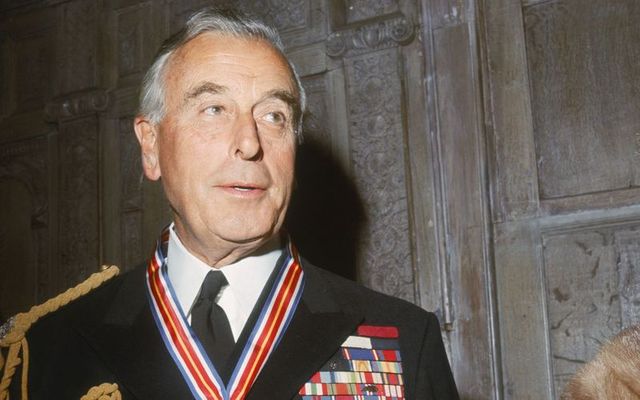
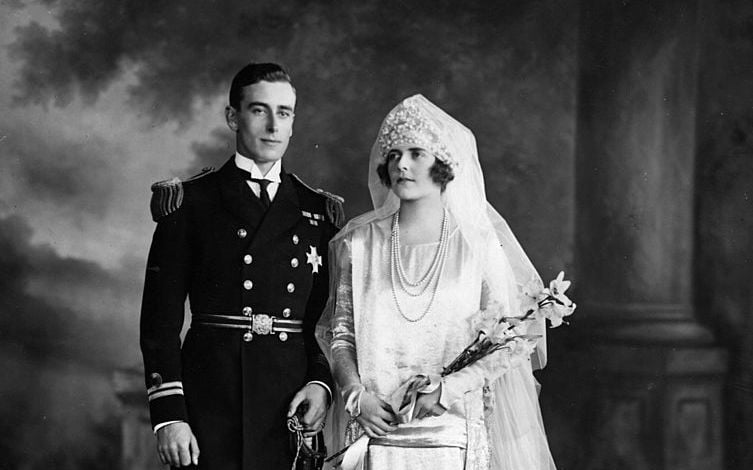
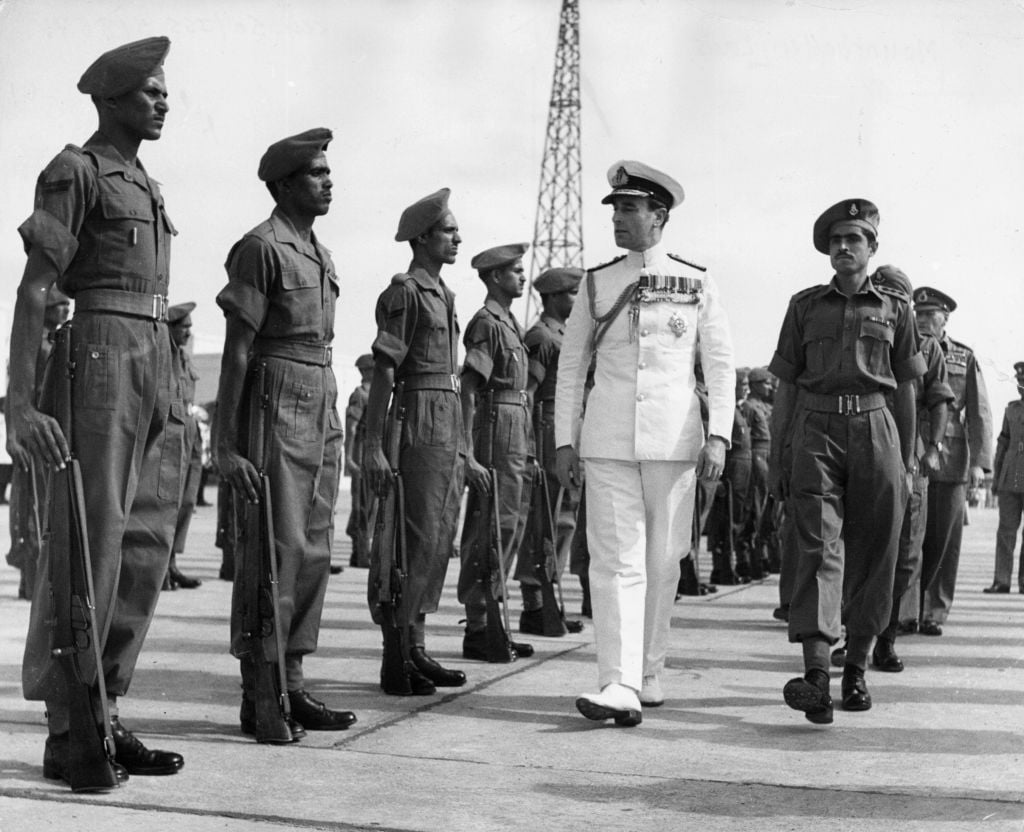


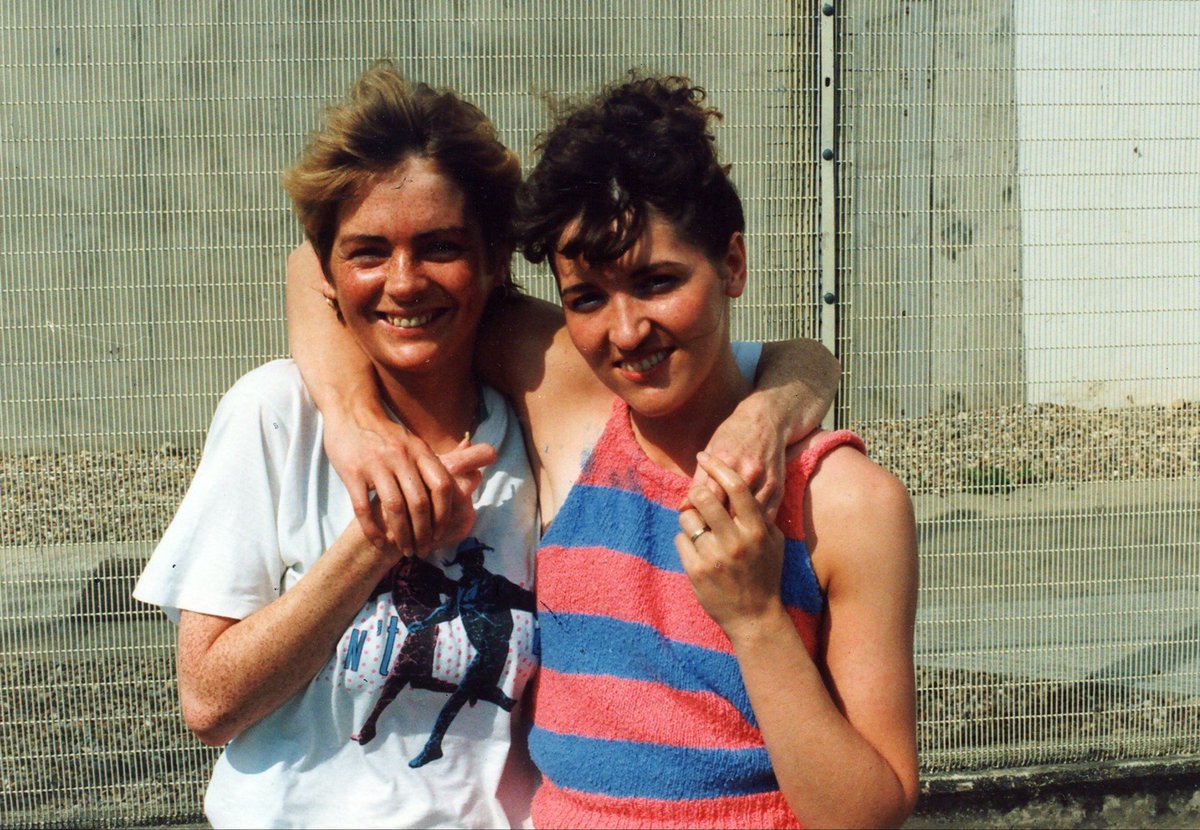

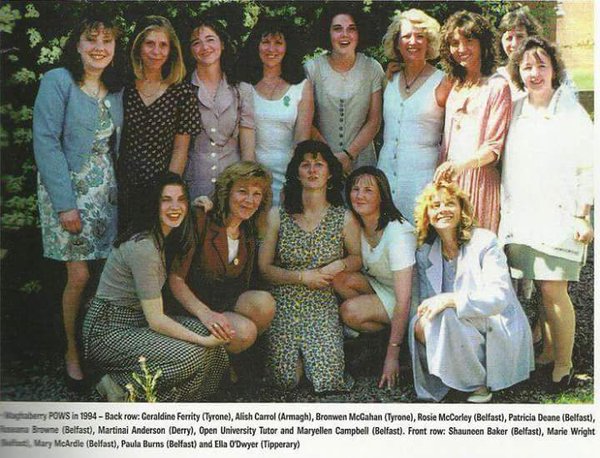
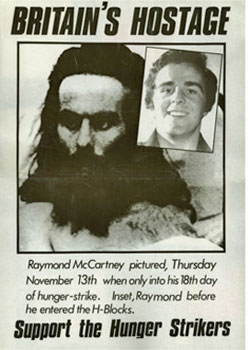


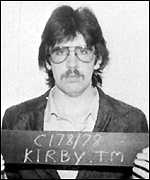


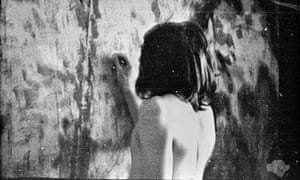
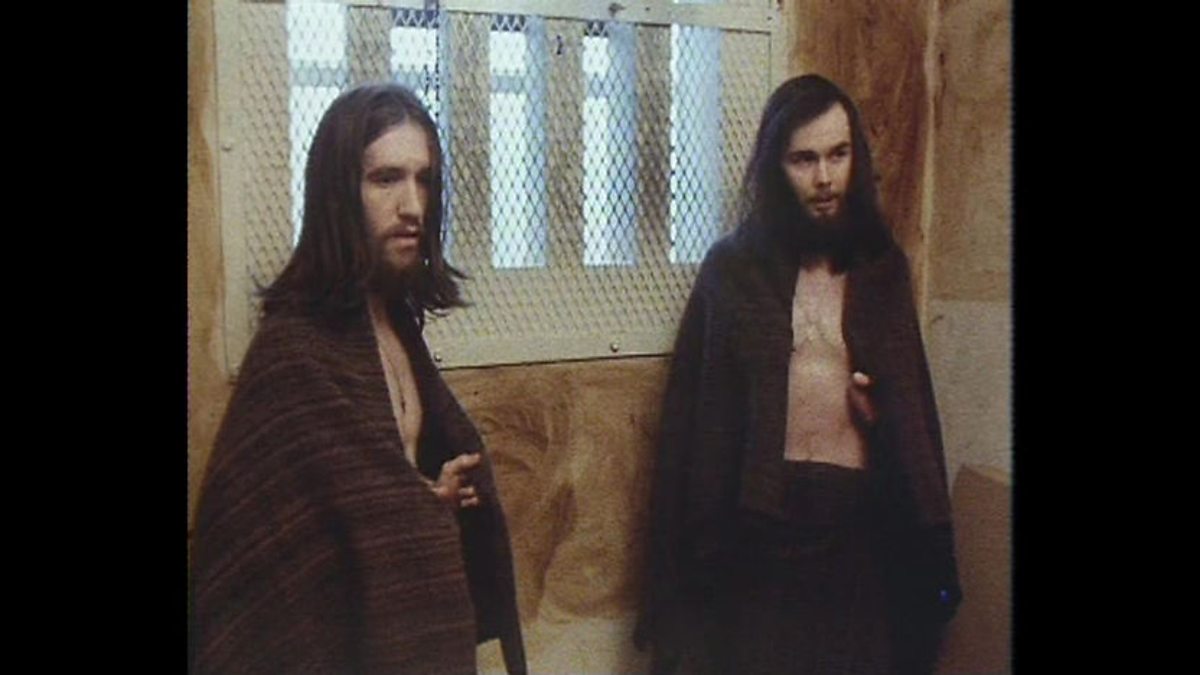
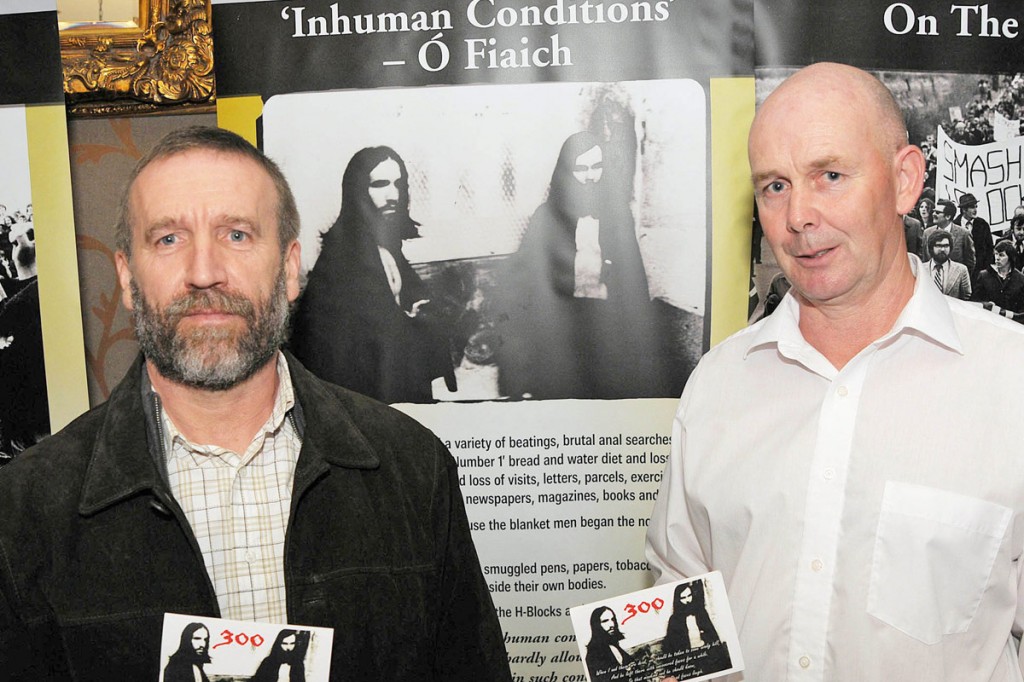
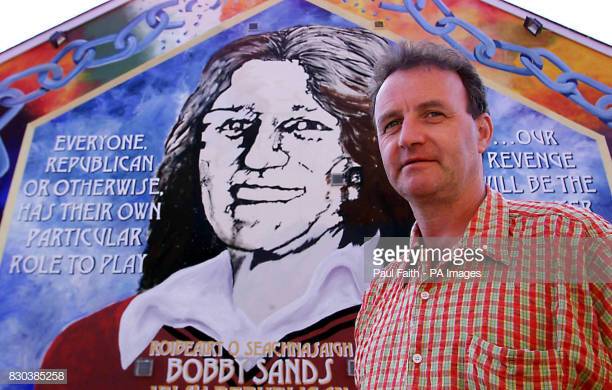
 Children of Roisin Dubh
